
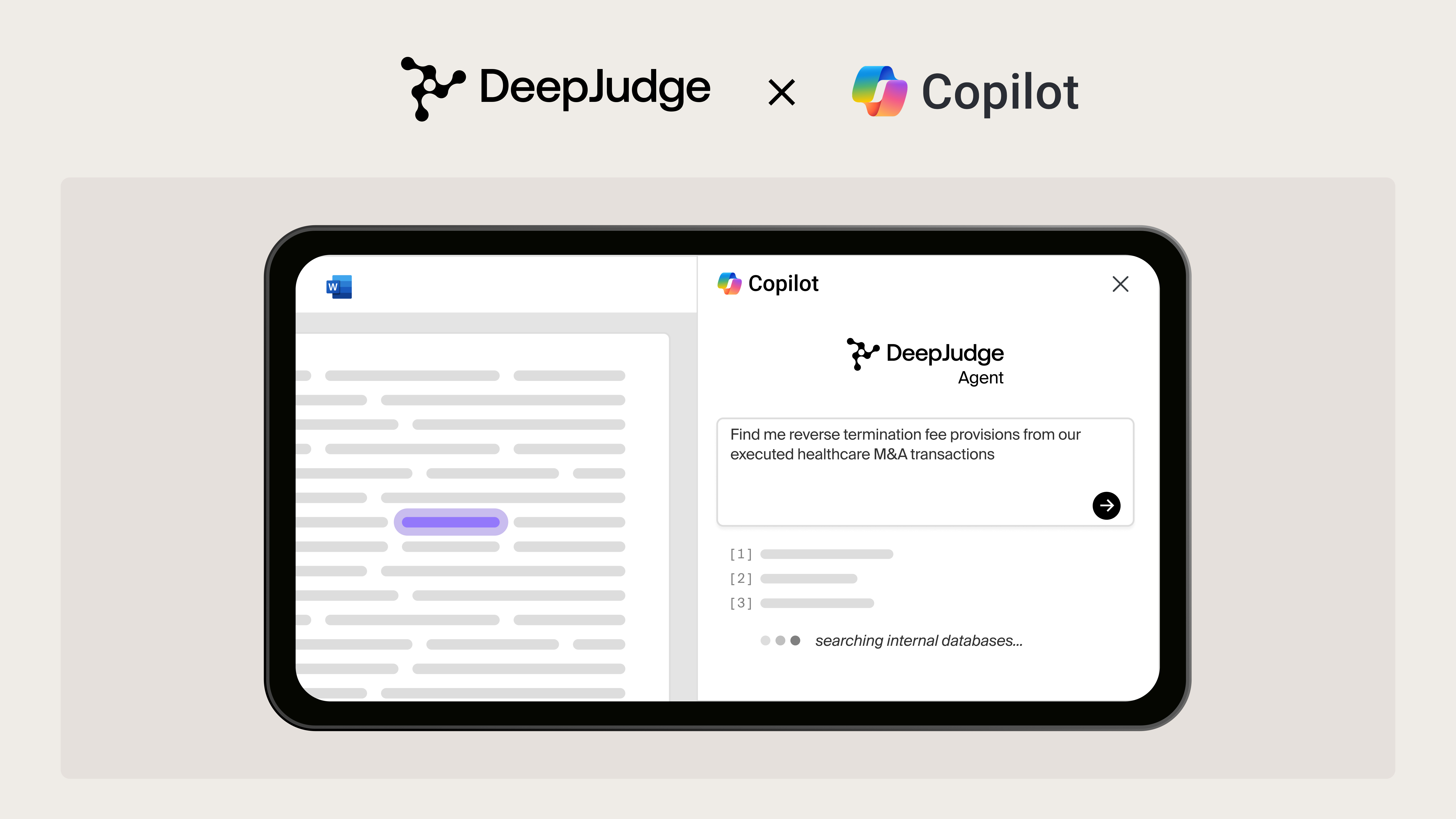
Lawyers ask critical, fact-specific questions: How have we negotiated MAC clauses for private equity buyers? Which vendors have we carved out of our standard limitation of liability? Which clients have potential exposure to this new rule? The answers are spread across document management systems, SharePoint/intranet, shared drives, and matter systems, making it impossible to surface and use institutional knowledge at scale.
The DeepJudge and Microsoft Copilot integration brings answers to those questions into Microsoft 365 via Model Context Protocol (MCP). Ask questions in Copilot, and DeepJudge retrieves permission-aware results from your firm or organization’s documents and metadata across systems. No data is uploaded or downloaded, and existing governance frameworks, including access permissions and ethical walls, are fully respected.
What This Means in Practice
Copilot already helps lawyers summarize and analyze information. Now, with DeepJudge, it can surface the knowledge that legal teams have accumulated over years of practice. Use it to answer questions only your organization can answer: negotiated positions, issues addressed before, prior work product: the collective intelligence built across all your matters.
- Leverage your unique legal expertise in Copilot. With DeepJudge connected, Copilot can surface answers from prior matters, documents, and expert insights across your different systems. Lawyers find what they need without leaving the tools they already use.
- Maintain strong data governance and security. DeepJudge indexes content across your internal sources while fully respecting access permissions and ethical walls. No data is downloaded or uploaded, so access to your legal knowledge stays secure and compliant by design.
- Keep momentum, cut context switching. Move seamlessly from research to drafting in Microsoft 365, fully informed by relevant institutional knowledge. No tab switching, no separate searches, no lost thread.
How Legal Teams Are Using DeepJudge with Copilot
The integration works across the matters and workflows where your firm or organization’s expertise matters most.
- Support Negotiation: “How has Firm X negotiated this clause with us before?”
- Find Prior Work: “Have we handled a scenario like this before?”
- Summarize Matter & Client Profiles: “Summarize matter XYZ / What have we done for Client Y?”
- Assist with Drafting: “Draft a consent-to-assignment clause with carve-outs, using prior clauses from the Party XYZ transaction.”
- Identify Expertise: “Who has experience in cross-border data transfers?”
Built for Legal Work
AI is only as useful as the context it can access, and in legal work, that context is institutional knowledge. DeepJudge makes it available, governed, and ready to use.